Cars That Made Me Care About Cars
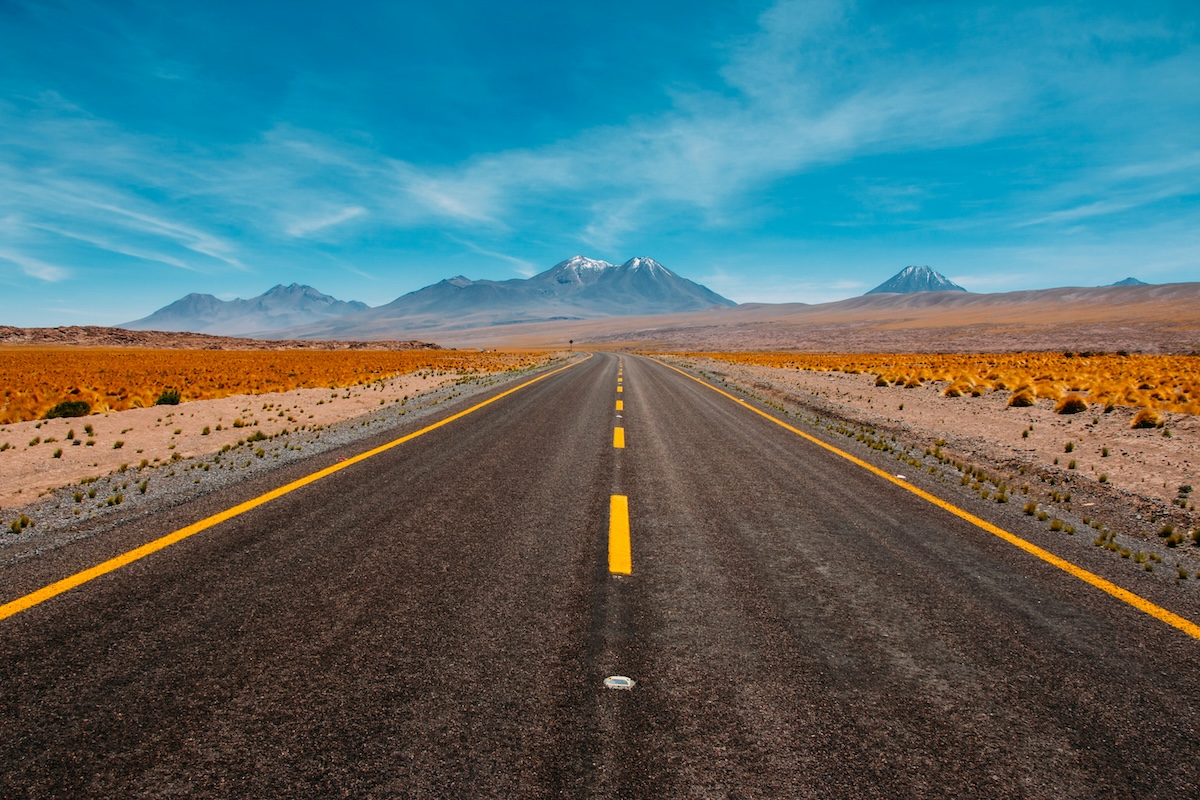
I owned one car on this list. A Renault Twingo, 2006, first generation, Gris Boréal. Initiale Paris, all the premium. I treated it well and it served me well during my single days when I moved to France. Then I got married, we had a first child, then a second. My wife kept driving it for a long period, because it was hers by then. Eventually two children in a Twingo becomes something you manage rather than something that works. We chose something bigger. The Twingo didn’t fail us. We outgrew it.
The rest of this list I’ve only ever wanted. Carried in my head since I was a kid. What they share: a shape you can sketch from memory, and a reason to exist beyond getting from one place to another. They’re mostly from before 2000. That’s not nostalgia. Post-2000, aerodynamic optimisation and safety regulation converged the industry onto a single optimal form. The physics made them better cars but made them harder to tell apart.
The Sculptors
Some cars you notice from across a car park. Not because they’re loud or tall or wrapped in something grotesque. Because someone thought about the shape before asking how it would sell. They carry a kind of beauty you can’t ignore and can’t explain away.
Citroën DS — DS23, 1972
Nothing in 1955 looked like this, and nothing in 2026 does either. Flaminio Bertoni designed it in clay, with his hands, no engineering drawings, and the result landed at the Paris Motor Show like something that had taken a wrong turn from the future. Citroën reportedly took 80,000 orders in the first day, and you can understand why.
The hydropneumatic suspension was an engineering marvel. Lose a wheel and the car keeps going, the suspension adjusting in real time. But the engineering is almost secondary to what you feel when you see one: it floats. It actually moves through space differently from other cars, as though gravity has agreed to make an exception. The DS has an aura, a calm and unhurried certainty about its own existence, that no contemporary car matched and very few since have approached.
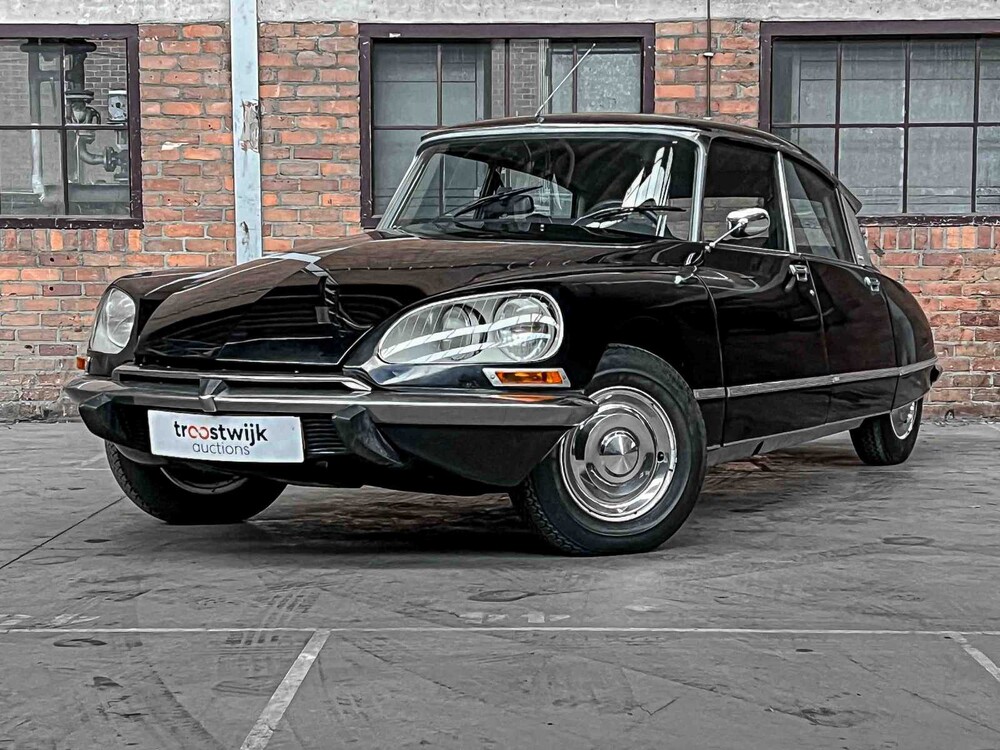
The DS23 is the peak of that idea. Citroën fitted it with a 2.3-litre engine producing around 115 horsepower, and offered the DS23ie with Bosch fuel injection, among the first mass-production cars to have it. The car had been on sale since 1955 and in 1972 was still ahead of everyone else.
Roland Barthes understood this in Mythologies, 1957: “I think that cars today are almost the exact equivalent of the great Gothic cathedrals: I mean the supreme creation of an era, conceived with passion by unknown artists, and consumed in image if not in usage by a whole population which appropriates them as a purely magical object.”
The DS line ended in 1975. The DS23 was its final form. Nothing overtook it.
Mercedes 280SL Pagoda — W113, 1969
Paul Bracq and Béla Barényi designed the W113 in 1963. The roof is concave: it curves inward, toward the cabin, like a Japanese pagoda tile, which is where the name comes from. One decision, and the car becomes instantly recognisable.
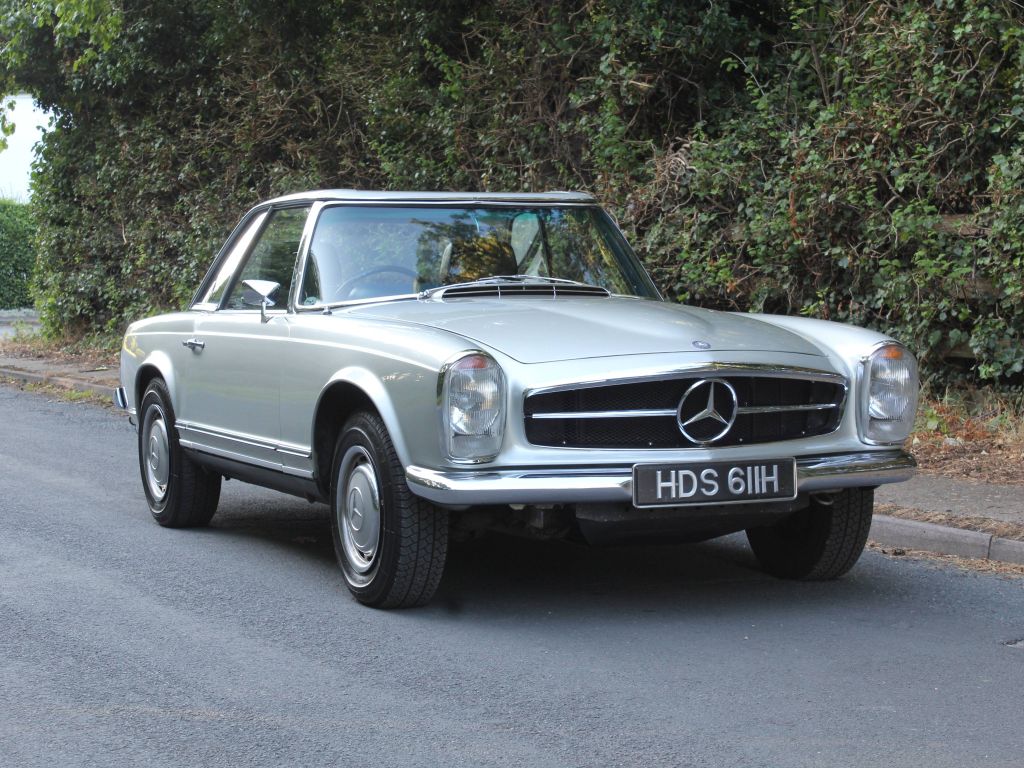
The Pagoda is, in every sense, a work of architecture. Sophisticated, precise, not asking for your attention but holding it the moment you give it. No flash, no performance, no drama. The calm authority of something that knows exactly what it is and has decided it’s enough.
The 280SL is the final and most resolved version of the W113. Its 2.8-litre straight-six produced 170 horsepower: effortless, not theatrical. Mercedes introduced it in 1967 to replace the 250SL, and the extra displacement gave the engine the smoothness it had been looking for. The 1969 car sits in the middle of that run, refined and settled.
The completeness of it is what gets you. Every line arrives where it should. Nothing decorative, nothing missing. You’re looking at a car that is finished in the deepest sense: nothing left to remove, nothing left to add.
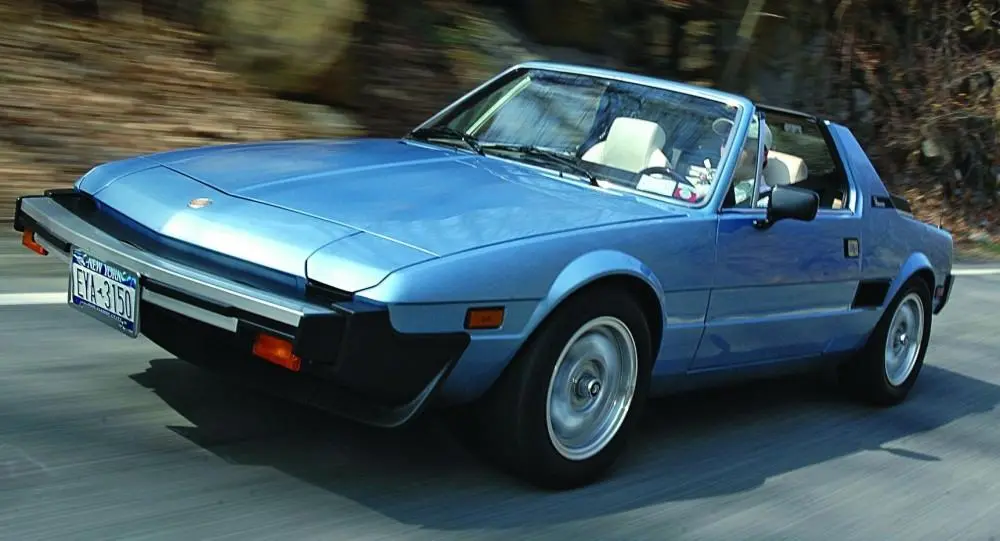
Fiat X1/9 — 1500 Series, 1979
No branding ambition, no engineering showmanship, nothing asking you to take it seriously as a status object. Just a car designed to be enjoyable: mid-engine, targa roof, good lines, fun to drive on an ordinary afternoon. The layout it shares with the Porsche 914 and the Pontiac Fiero. Same formula, roughly the same era. But Gandini’s lines on the X1/9 had something the others didn’t: a cleanliness, a completeness, that made the car look considered rather than assembled.
Marcello Gandini drew it for Bertone. The same man who did the Lamborghini Miura and the Countach. The X1/9 cost a fraction of either. The point was to prove a mid-engine targa didn’t require a Lamborghini budget or a Lamborghini ego. The 1500 Series arrived in 1978 with a 1.5-litre engine replacing the original 1.3, 85 horsepower with better torque through the rev range. Not fast by any objective standard. Fast enough to be fun, which is what matters.
The X1/9 is not a great car. The reliability is period-correct Italian. It looks like something that should exist, which most cars don’t.
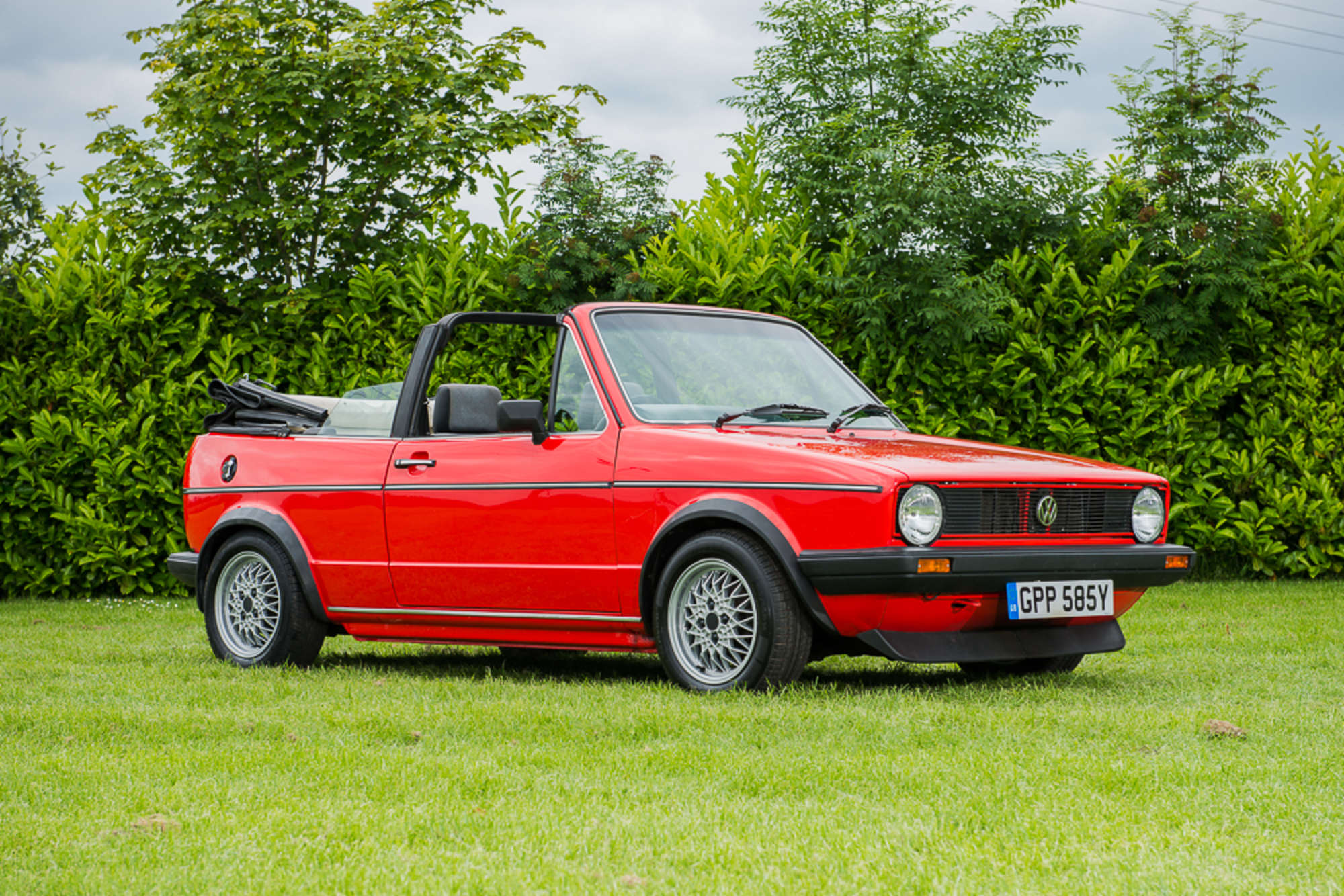
VW Golf I Cabriolet — 1982
Bertone converted the Golf I into a cabriolet in 1979. The result ran unchanged until 1993, fourteen years with no meaningful redesign. That’s not neglect. That’s a manufacturer looking at what they had and deciding it was right.
The 1982 car was the Golf I Cabriolet at its most settled: early production issues resolved, the hood mechanism reliable, the 1.6-litre engine confident in what it was there to do. 75 horsepower. A small front-wheel-drive hatchback with the roof off. Nothing expensive, nothing remarkable on paper.
What it gave was something else: the feeling that the road was there and the roof was gone and that was reason enough. Attainable, practical, everywhere. The Golf didn’t ask you to earn the freedom it offered. Some cars impress you into feeling free. This one just took the ceiling off and let you drive. That’s enough.
Renault Twingo I — 1992, owned 2006
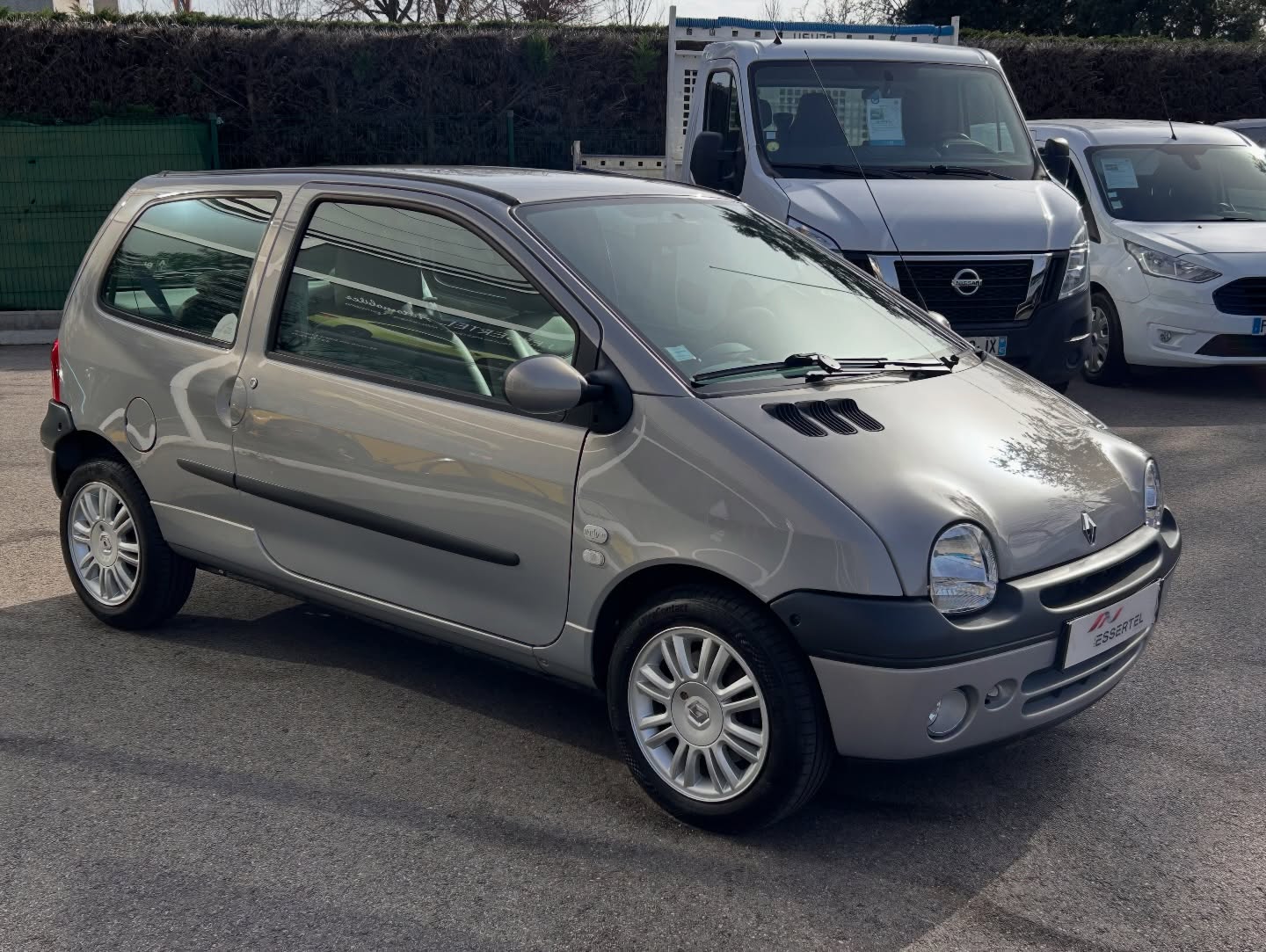
Patrick Le Quément drew the Twingo as one unbroken gesture: a monobox, no crease lines, nothing to interrupt the curve from windscreen to hatch. It looked like nothing else on the road in 1992. It still doesn’t.
When Raymond Lévy, Renault’s president, first saw the finished car, he smiled back at it. Le Quément told him: “It’s a car that, when it rains or freezes, you don’t leave in the street. You take it under your arm and put it down in the warmth in front of the fireplace.”
He was talking about it like a pet. That was the idea, and it was right.
The shape barely changed in fifteen years because it didn’t need to. Mine was a late first-gen. Gris Boréal. Initiale Paris, every option Renault put on the list. It felt like the right thing to have. When our second child arrived and the geometry of daily life stopped working, my wife drove it until it really didn’t. We chose something bigger. It did everything we asked. We just needed more than a Twingo could give.
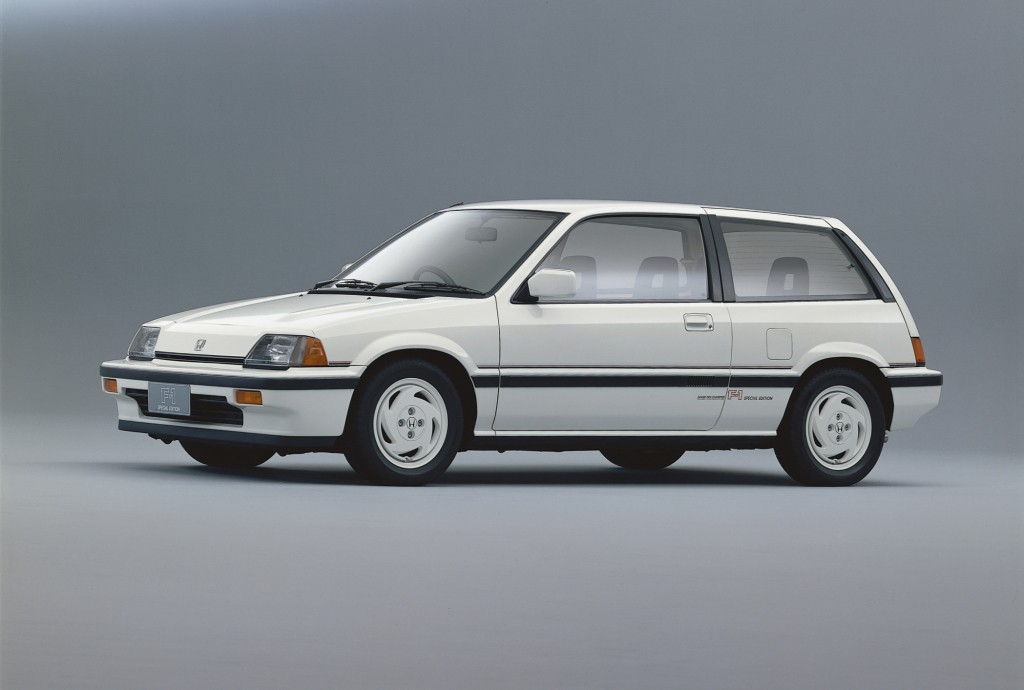
Honda Civic — 3rd generation, 1985
The 3rd-generation Civic arrived in 1983 and looked unlike anything else in its class. Boxy, angular, precise. Clean panel gaps, rectangular headlights, lines that went where they were supposed to go and stopped there. Japanese car design in the mid-1980s had found a language, and this was one of its clearest expressions.
I saw one as a kid and something clicked. The precision of it. The honesty of the angles. I think that’s where it started, that preference for cuts over curves, for geometry over decoration. A hatchback was enough to do it.
The Si variant ran a 1.5-litre 12-valve SOHC engine producing 91 horsepower in a car that weighed under 800 kilograms. What Honda had proved with the first-generation Civic (the CVCC engine, US emissions without a catalytic converter, in 1975) they built on without making a fuss. By 1985, Western manufacturers had stopped dismissing Japan and started copying it instead.
The Engineers
Others you respect before you love. These are not the cars that stop you in the street. They’re the ones where you learn what’s underneath, and then you can’t unsee it. What the engineers decided to do, and how they made it work. That’s where the beauty is.
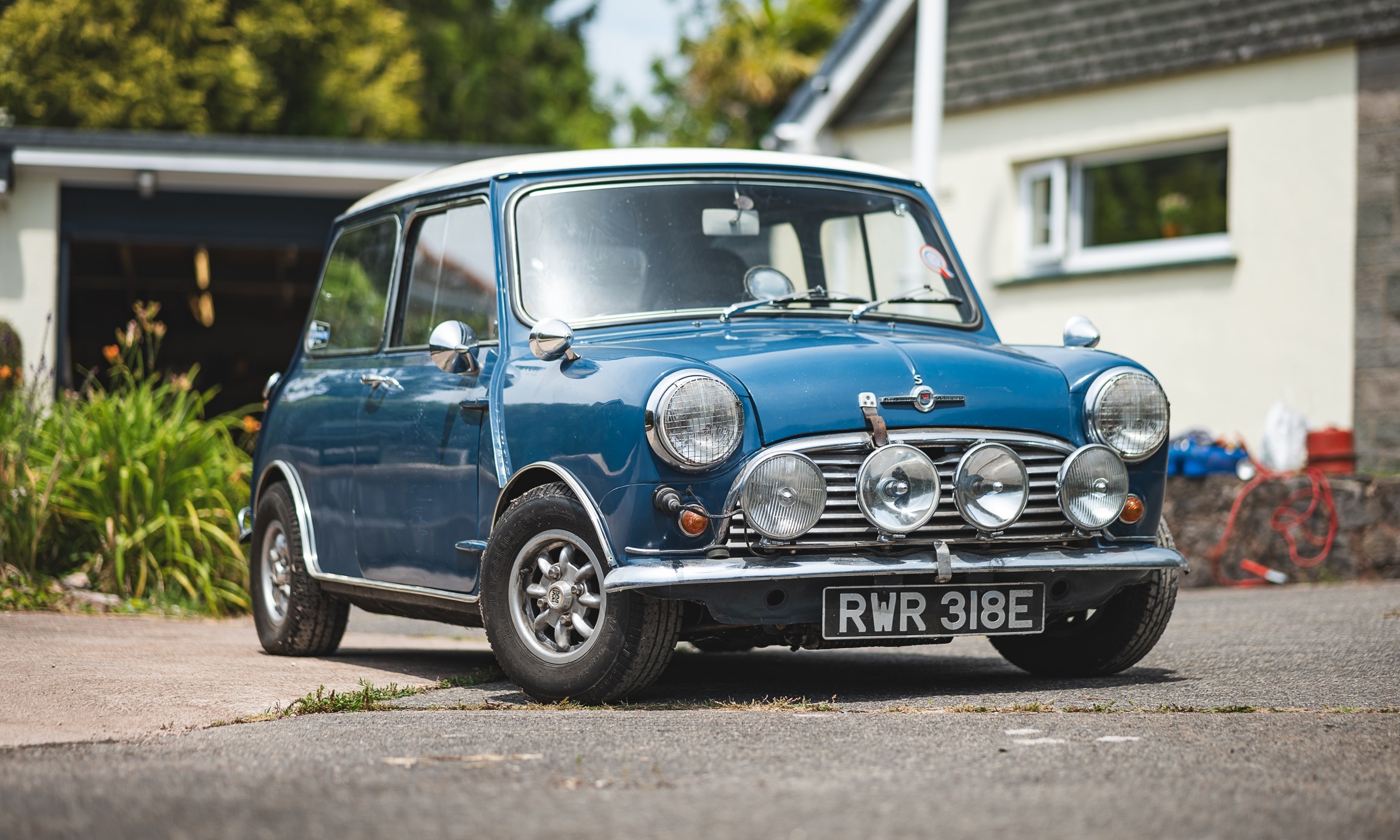
Mini Cooper S — 1967
James May once said the Mini was “the most important car ever made, not the best.” He was right. The ingenuity of fitting something that raced and won into something that small is the achievement. The compactness is the design.
Alec Issigonis did it in 1959: front-wheel drive, transverse engine, ten-inch wheels. To fit the gearbox, he put it directly under the engine, in the sump. Nobody had done this before. The result gave passengers 85% of the car’s floor space. The Cooper S took that same package and added a 1,275cc engine, twin SU carburettors, and 76 horsepower. It won the Monte Carlo Rally in 1964, 1965, and 1967. By 1967, the formula was fully realised.
Then the Italian Job: three Minis through the sewers of Turin, down staircases, across rooftops, tough and precise and unstoppable. Then Mr Bean’s Mini: battered and wronged by the world and never quite beaten. The same tiny car. Two completely different things it turned out to be capable of.
Audi 100 C2 — 1979
A family member had one. The CC, the special edition, top of the range. As a kid I remember sitting in it and feeling the weight of the thing: the interior, the quiet, the sense that everything had been thought about. Long trips in that white car were where part of my musical taste was formed. I only understood that later.
The ride was composed, the 2.0-litre diesel inline-five turning over slowly and pulling without effort, and at speed the whole car seemed to gather itself rather than strain.
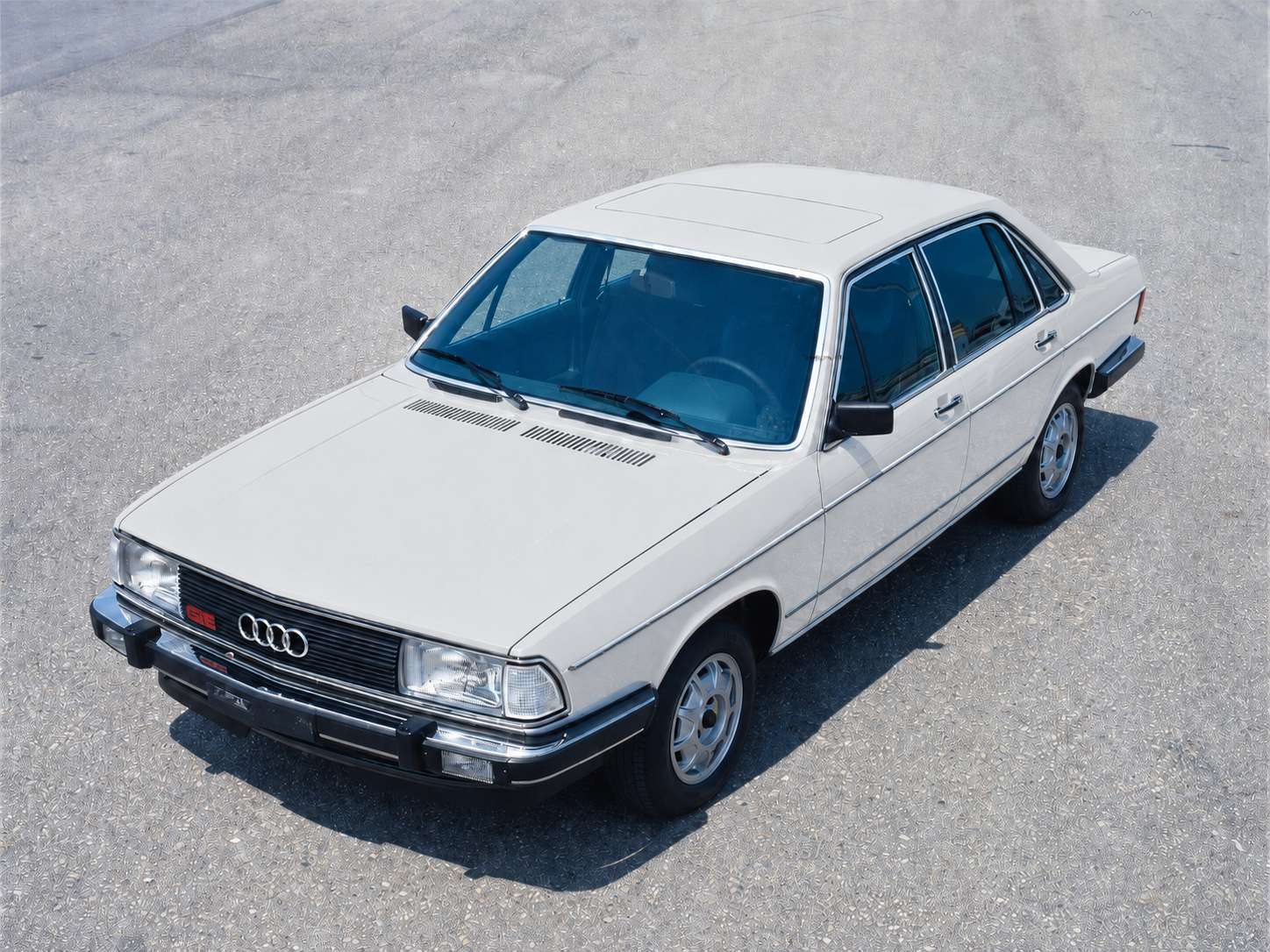
The C2 generation ran from 1976 to 1982. The inline-five engine it introduced, 70 horsepower with a sound like nothing else on the road, became the signature of Audi’s engineering character for the next two decades. The interior finish was genuinely imposing, which is different from showy. This was Audi before Audi decided it was a luxury brand. The quality was already there. The branding hadn’t caught up yet.
Mercedes-Benz W123 — Phase 3, 1982
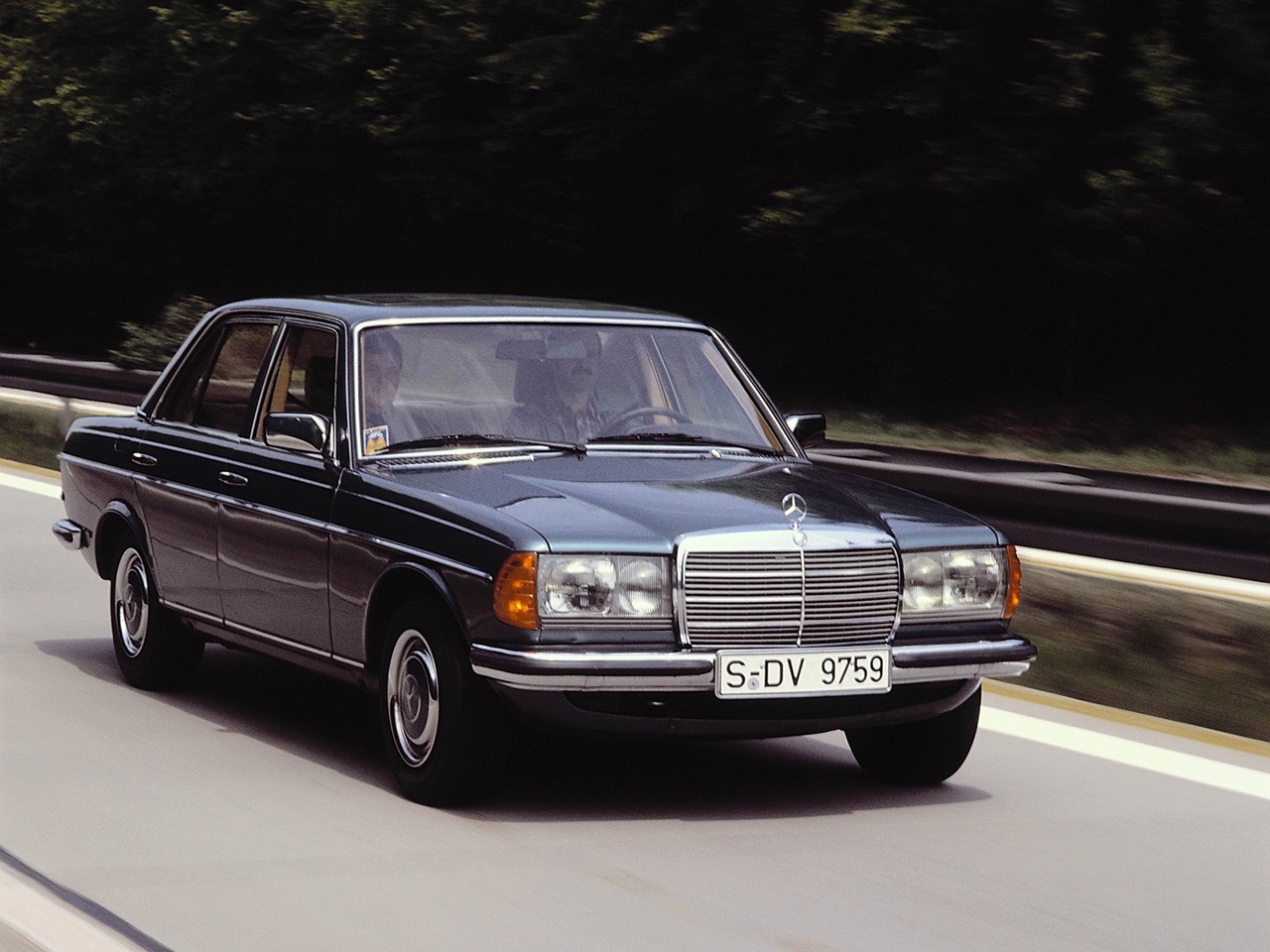
A family member had one. As a kid I watched him maintain it himself, not because he had to, but because the car made that possible. Simple enough to work on, honest enough to show you what was wrong. He never looked worried about it. The car never gave him reason to be.
The W123 240D and 300D diesel variants are routinely documented at 500,000 kilometres with original engines and minimal intervention. Mercedes built the Phase 3, the final, most refined iteration with the 3.0-litre diesel producing 80 horsepower, to last longer than any commercial logic required. The engineers apparently found the alternative unacceptable.
What struck me as a kid was the timelessness of it. The kind of car that looks correct in any decade because it was built around what a car should do, not what it should look like that year. You keep it for twenty years and it still looks remarkable. That’s what it felt like. And that feeling stayed.
Nissan Patrol Gen 3 — MQ/MK series, 1980
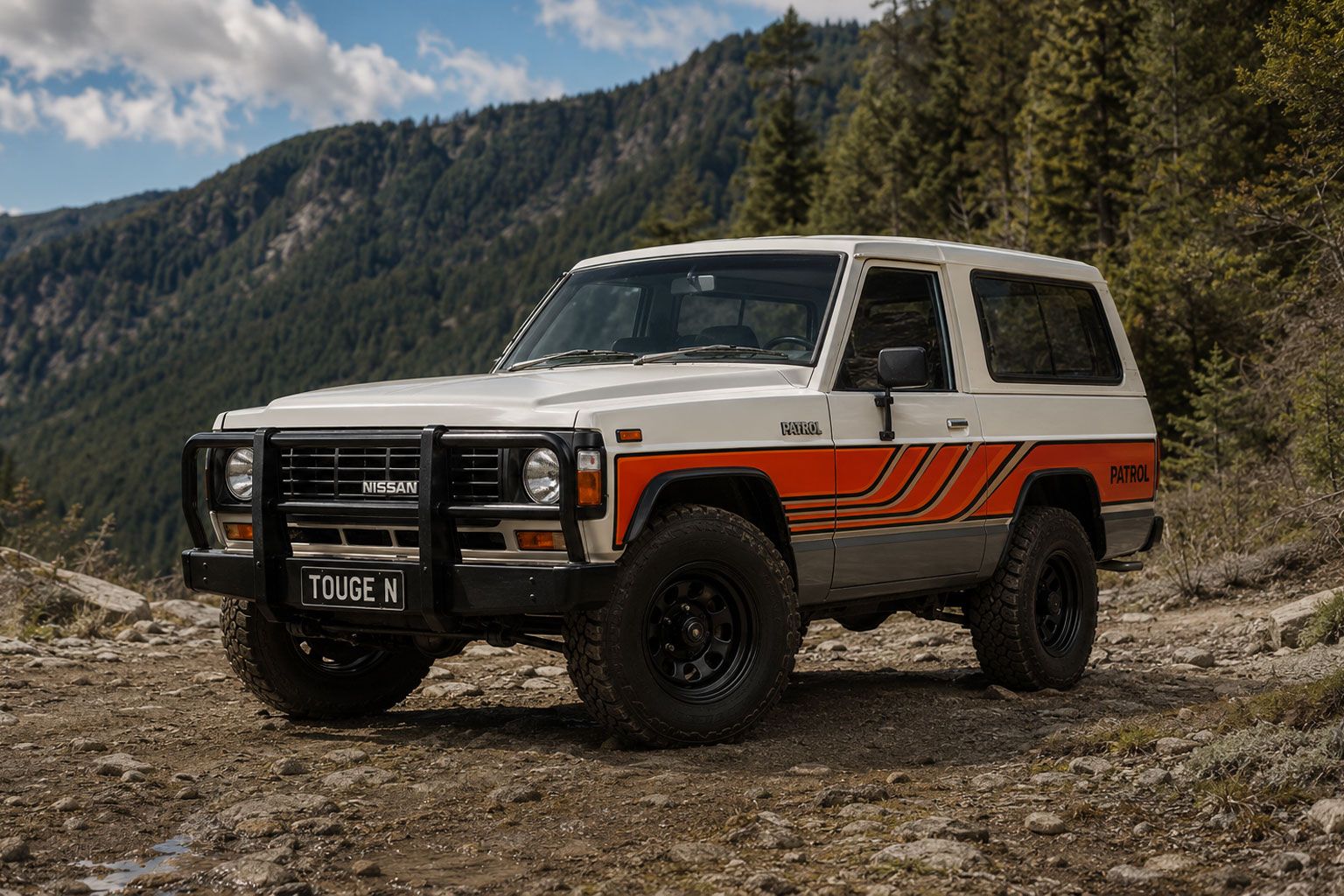
As a kid in Kuwait I saw these crossing the desert like it was a car park. No drama, no strain, just machines doing exactly what they were built for, in conditions that would end most other vehicles. The word that came to my mind then was unbeatable.
Solid axles front and rear, SD33 inline-six diesel, a transfer case built to last indefinitely. The Gen 3 Patrol made no compromise for comfort and none for refinement. Every engineering decision pointed at the same goal: go anywhere, survive it, come back. It was everywhere worldwide, not as an off-road toy, but as the default vehicle for people who needed something that would not fail them.
A tank that wore its capability as ordinary clothes. Very few machines ever managed that.
Cinema & Memory
Some cars got to me before I understood what a car was. Through a screen, through a poster, through a toddler’s-eye view of a car park. At that age you have no theory, no criteria, no way to explain what you’re looking at. You just know whether something does something to you. These three did.
Ford Mustang — 1968 fastback
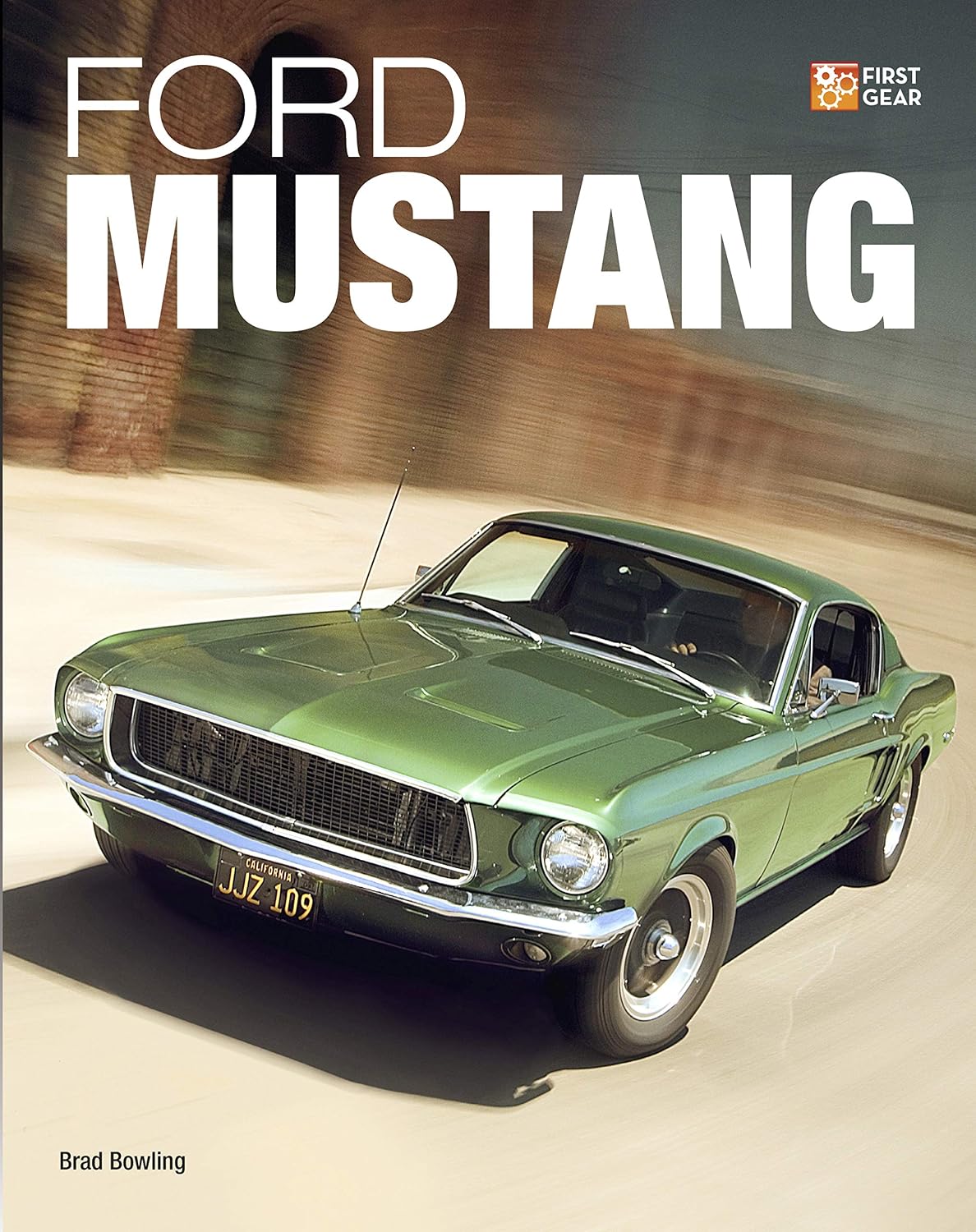
Before I saw the film, I saw the poster. Highland Green, San Francisco streets, Steve McQueen behind the wheel with the look of someone who has somewhere to be and intends to get there. The image does something to you before you know anything about the car.
Bullitt came out in 1968. The chase sequence through San Francisco is ten minutes of a 390 cubic inch V8 (6.4 litres, 325 horsepower) doing things that made the film secondary to the car. The Mustang fastback doesn’t appear in that scene. It inhabits it.
The 1968 fastback body, with the long hood, the short deck, the roofline that sweeps back and drops, is one of those shapes that photographs like it was designed to be photographed. A muscle car built at the exact moment American cinema discovered that a car could be a co-star, not a prop.
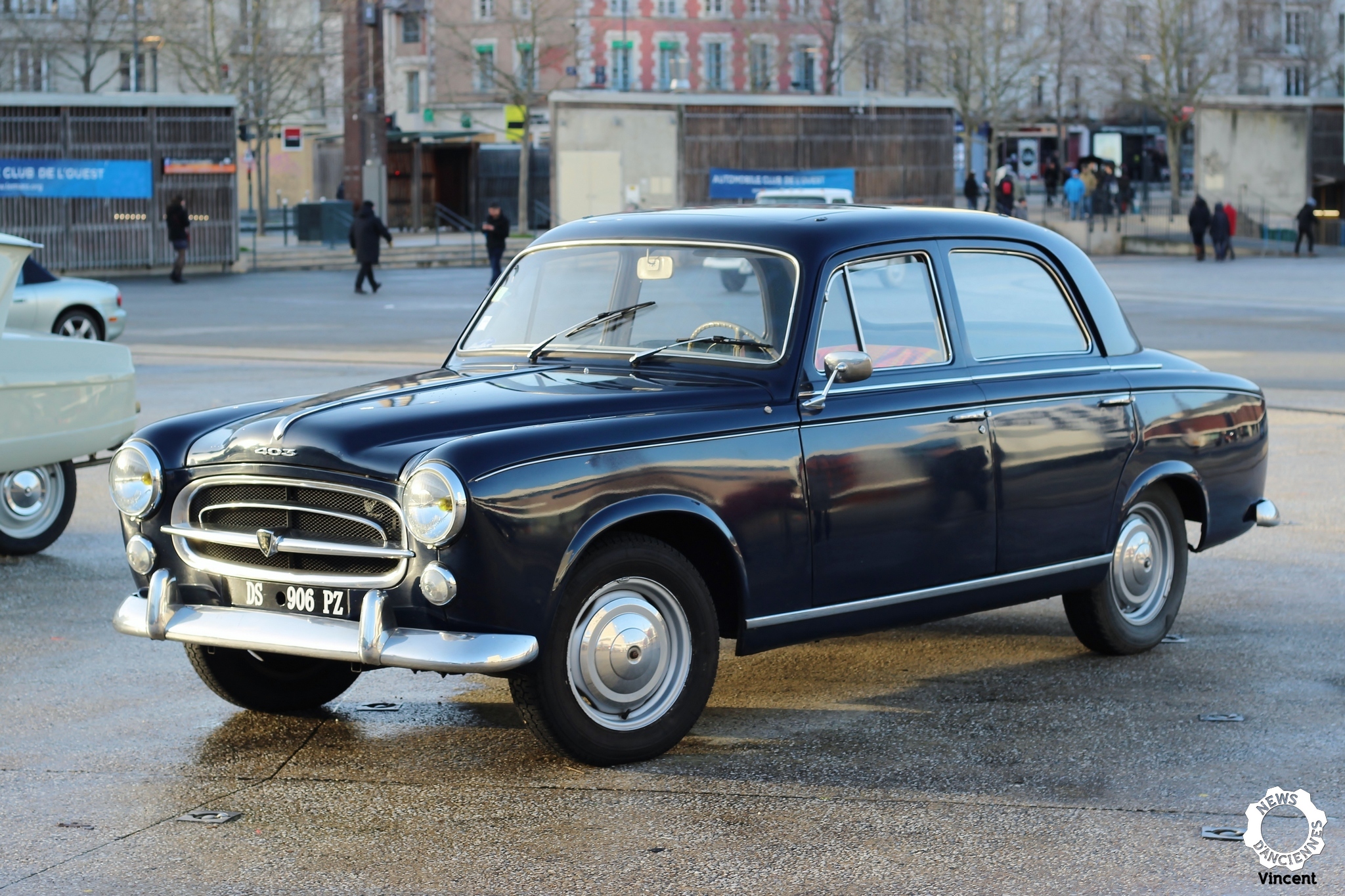
Peugeot 403 — 1959
My father’s first car was a 403. There are photos of me next to it, small enough that the wheel arch reaches my shoulder. I also remember the inside: so much space it felt like a room. That’s all I have, and it stayed.
Pininfarina designed it. Coming after the 203, boxy, upright, purely functional, the 403 was a statement of intent: French family motoring could have curves, could have grace, could be done with taste. The transition didn’t sacrifice practicality. It just decided practicality wasn’t enough.
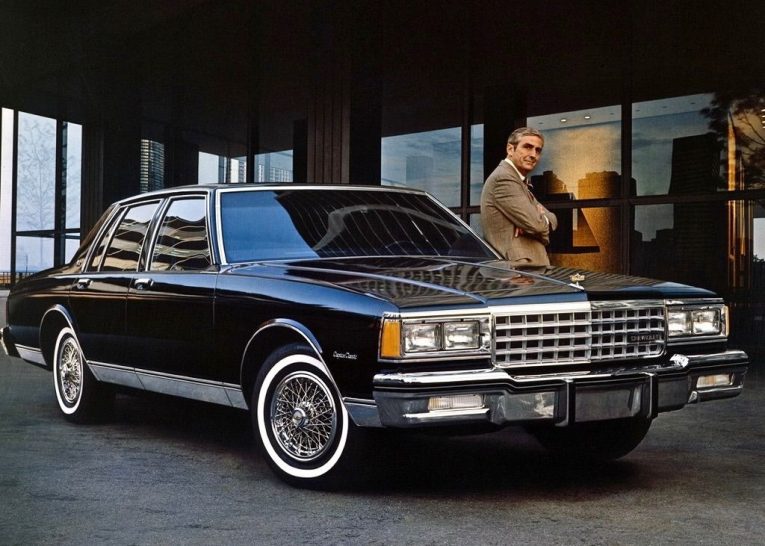
Chevrolet Caprice — 1980
The Caprice looks like a child’s drawing of a car. You know the one: big rectangle, four circles, two lines for windows. From the side, the thing is so long and so flat that you genuinely struggle to identify which end is the front. It is, by almost any objective measure, a design that does not try.
And yet there is something about it. The bench seat is wide enough that I once joked to a friend it had a dedicated spot just for your hand. The V8, the sheer bulk of the thing moving down a road. It has the aura of a family sedan taken to a logical extreme that shouldn’t work but somehow does. Every taxi, every police cruiser, every American road trip in every film from the 1970s to the 1990s had one somewhere in frame.
I have always smiled when I see one. I still smile now, when one turns up on screen. Almost tasteless, entirely itself. The Caprice never tried to be anything other than what it was, and at a certain size that honesty becomes its own kind of dignity.
The Machines
Some cars don’t ask you to notice them. The engineering is the whole point, and it takes time to see it. Just a machine doing exactly what it was designed to do. I have two of those on this list. Both happen to be BMWs.
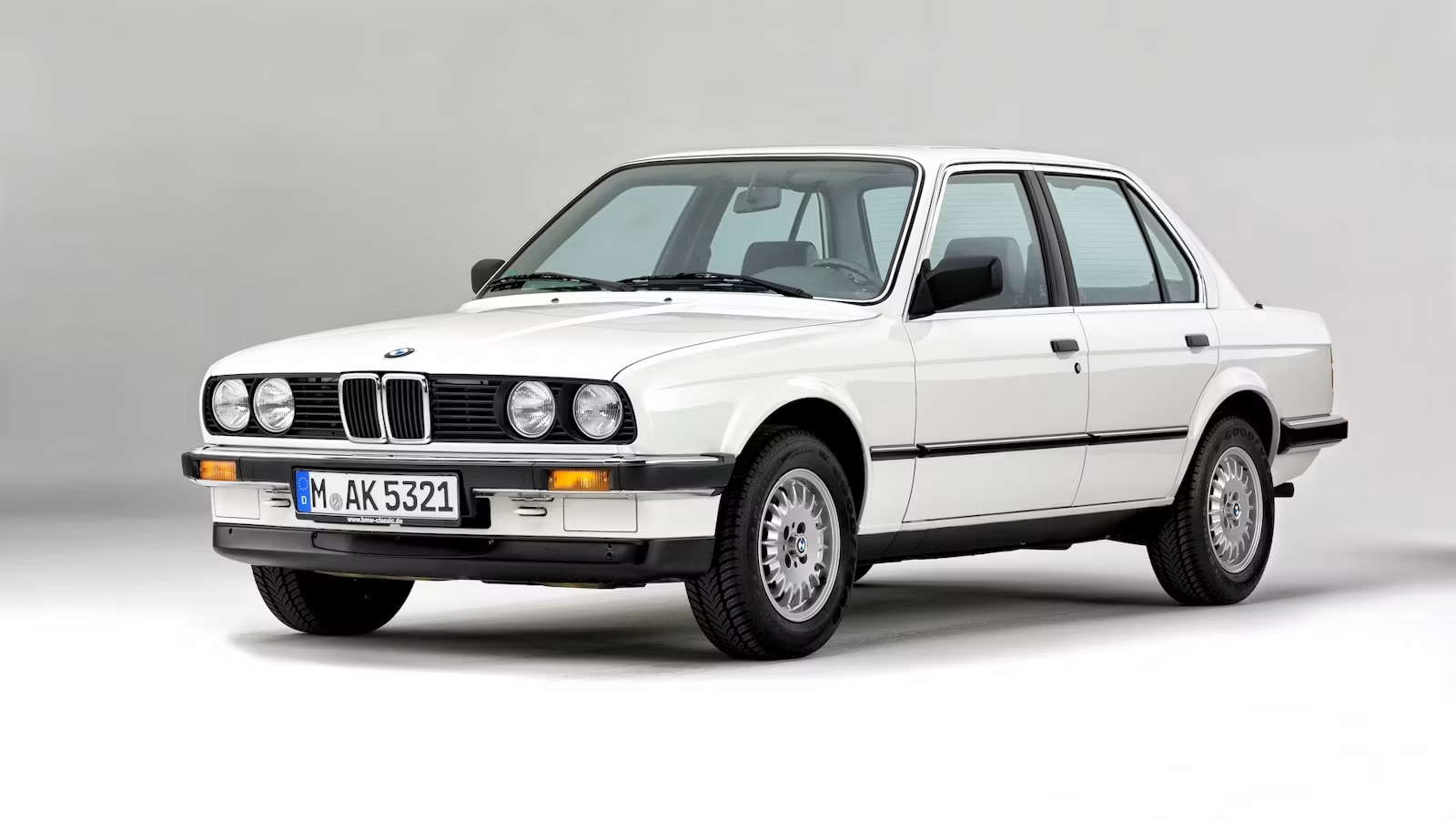
BMW 318i — E30, 1994
I came across the E30 as a teenager and something registered without fully forming. An ordinary car that carried itself differently. Years later, when I understood the engineering behind it, I realised the impression had been right all along.
The E30 is the BMW before BMW became a brand statement. A 1.8-litre four-cylinder, 136 horsepower, rear-wheel drive, in a body that looked exactly like what it was: a driver’s car that happened to seat four. Everyday usefulness without sacrificing the sporty look, and nothing wasted to get there. BMW found that balance once. They’ve spent the next four decades trying to find it again.
BMW 850i — E31, 1989
I grew up watching Knight Rider. I loved Kitt, but I never loved the car underneath it. The Trans Am had an aggression to it, a muscle-car bravado that felt too loud for what I actually wanted, which was something sleek and purposeful and precise rather than just fast-looking.
Then I saw a black E31 as a kid, and that was enough.
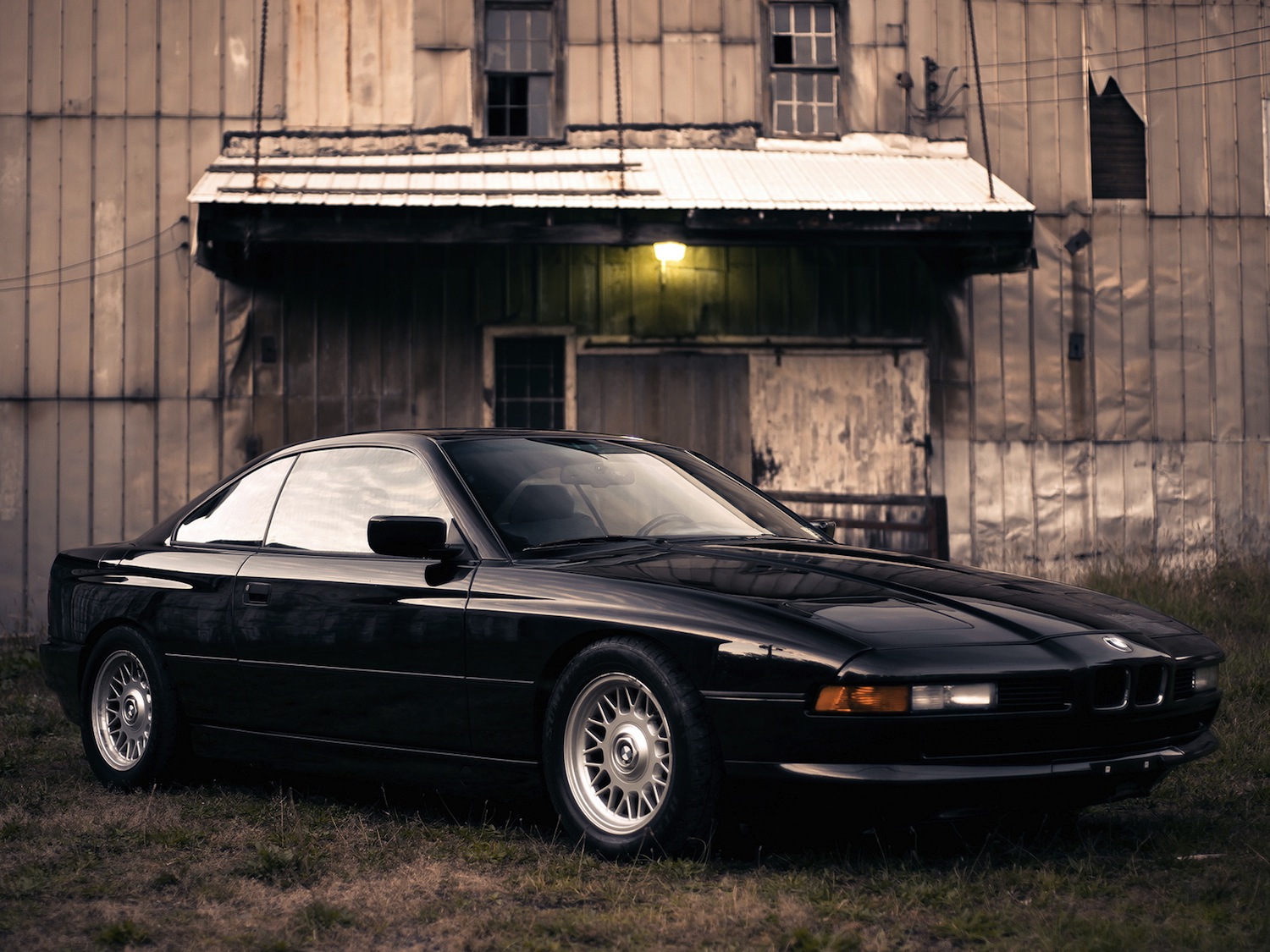
The 850i carried a 5.0-litre V12 producing 300 horsepower, BMW’s most ambitious engine at the time, shared with the 750i saloon. The body, designed under Claus Luthe, sat low and wide with a long bonnet and a roofline that swept cleanly to the rear. The electronics were overambitious for 1989 and gave early cars trouble. BMW didn’t care. They were building something extraordinary and they knew it.
The E31 is timeless. It looks neither old nor new, just correct. Sporty without aggression. The car I wanted instead of the Trans Am, and the car that proved I was right to want it.
I owned one car on this list. The Twingo. It was enough.
Every now and then I look at 280SL listings. The prices are always too high and I always stop. One day, maybe. Probably not.
The others I see occasionally, on a street, at a light, in a car park somewhere unexpected. I always stop, and I always smile: at the shape of a DS that still looks like nothing else on the road, at the sweep of an E31 in the dark. I think about the people who drew these things, the engineers who made them work, the ones who believed a car could be more than transport. Most of them only got to do it once.